
About IRCDL 2026
Since 2005, the Italian Research Conference on Digital Libraries (IRCDL) has been an annual event for researchers on Digital Libraries and related topics. IRCDL has become a key forum on digital libraries and associated issues. It covers various aspects, including new forms of information institutions, digital content management, and theoretical models of information media. The conference welcomes participants from academia, government, industry, and other sectors. It draws from diverse research areas such as computer science, digital humanities, information science, librarianship, archival science, museum studies, technology, social sciences, cultural heritage, and humanities. This year's conference features two tracks: one on Computer Science Foundations for Digital Libraries, and another focused on Digital Humanities. IRCDL is partially supported by the Department of Engineering "Enzo Ferrari" of the University of Modena and Reggio Emilia.
Proceedings Now Available!
The conference proceedings have been published on CEUR-WS. Explore the latest research contributions from our authors.
Submissions are welcome concerning theory, architectures, data models, tools, services, infrastructures. A list of possible topics (but not limited to) for the conference is the following:
- Open data
- Open science: models, practices, mandates, and policies
- Information retrieval and access
- Information extraction from tables and figures in scientific literature
- Machine learning and data mining for digital libraries
- Generative AI and foundation models for digital libraries
- Responsible and ethical AI in digital libraries
- Ontologies
- Knowledge discovery, representation, and reasoning in digital libraries
- Knowledge acquisition from scientific papers
- Document analysis (layout, text, images)
- Services for digital arts and humanities
- Cultural heritage access and analysis
- Metadata (definition, management, curation, integration)
- Digital manuscript analysis
- Data repositories and archives
- Data citation, provenance and pricing
- Data and information lifecycle (creation, store, share and reuse)
- Semantic web technologies and linked data for digital libraries
- Digital epigraphy
- Digital preservation and curation
- Quality and evaluation of digital libraries
- Digital scholarship
- Citation analysis and scientometrics
- Research infrastructures
- User participation
- Human-computer interaction and user experience
- Multimodal and multimedia information management
- Applications of digital libraries
Tracks
The 22nd Conference on Information and Research Science Connecting to Digital and Library Science will feature two different tracks:
Track 1
Computer Science Foundations for Digital Libraries: Algorithms, Systems, and Applications
This track examines core computer science concepts essential for digital libraries. It covers algorithms for information retrieval and data management, system architectures for large-scale digital collections, and practical applications in areas such as academic research and cultural heritage preservation.
Special Issue
Published in International Journal on Digital Libraries.
Track 2
Digital Humanities: The Science and Foundation of Modern Humanities Libraries
This track explores the intersection of digital technologies and humanities research. It examines computational methods for analyzing and preserving cultural artifacts, text mining techniques for large-scale literary analysis, and digital platforms for collaborative scholarship.
Special Issue
Published in Umanistica Digitale.
Submissions
Research papers, describing original ideas on the listed topics and on other fundamental aspects of digital libraries and technology, are solicited. Moreover, short papers on early research results, new results on previously published works, and extended abstract on previously published works are also welcome:
- Research papers: should be in the 10-12 pages range.
- Short papers: should be in the 6-7 pages range.
- Extended abstracts: should be 5 pages long.
For all the submission types the references are not counted in the page limit.
Submissions of research papers must be in English, single blind, in PDF format in the CEURART single-column format available either at Overleaf website or CEUR-WS repository (for the offline version):
- Overleaf template
- ⚠️ Due to recent changes in Overleaf's policy, a paid account may now be required to compile this template. It is recommended to check and, if necessary, use a local LaTeX setup.
- CEUR.WS repository (offline version)
- ODT version
The accepted papers will be published in the IRCDL 2026 Proceedings. The Proceedings will be published by CEUR-WS, which is gold open access and indexed by SCOPUS and DBLP.
Submission will be through the submission system at the following link:
https://cmt3.research.microsoft.com/IRCDL2026/
The Microsoft CMT service was used for managing the peer-reviewing process for this conference. This service was provided for free by Microsoft and they bore all expenses, including costs for Azure cloud services as well as for software development and support.
This year's conference will be an in-person-only event, and virtual or hybrid options will not be offered.
Important Dates
Deadlines refer to 23:59 (11:59 PM) in the AoE (Anywhere on Earth) time zone
Deadline extended!
Submission deadline
November 28, 2025
December 12, 2025
Notification of acceptance
January 23, 2026
Camera-ready deadline
February 9, 2026
Conference
February 19-20, 2026
Invited Speakers
Debora Nozza
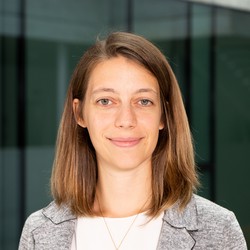
A Roadmap for the Everyday Use of LLMs: Emerging Risks and Research Directions
Large Language Models (LLMs) are increasingly part of everyday life, shaping how people seek information, advice, and guidance. This rapid shift raises new challenges that extend beyond traditional NLP benchmarks, as models can influence decisions, beliefs, and perceptions in subtle but powerful ways. In this talk, I will reflect on recent research and ongoing work aimed at identifying these challenges and exploring how we can design LLMs that foster safer, more trustworthy, and more pluralistic interactions.
Bocconi University
Debora Nozza is an Assistant Professor in the Computing Sciences Department at Bocconi University in Milan, where she co-leads the MilaNLP Lab together with Dirk Hovy. She was awarded a €1.5m ERC Starting Grant in 2023 for research on personalized and subjective approaches to Natural Language Processing, and previously received a €120,000 grant from Fondazione Cariplo for the MONICA project. Her research focuses on Natural Language Processing, particularly on the detection and mitigation of hate speech and algorithmic bias in multilingual contexts, and on understanding how and why people use large language models (LLMs) in their everyday lives. She is an organizer of the Workshops on Online Abuse and Harms (WOAH), Gender Bias in NLP (GeBNLP), and WASSA at ACL conferences, as well as the International Workshop on Protecting Women Online (TSWW) at the Web Conference 2025. She also co-organized several shared tasks, including HODI at Evalita 2023, AMI at Evalita 2018 and 2020, HatEval at SemEval 2019, and TextDetox at CLEF 2025.
Roberto Pierdicca
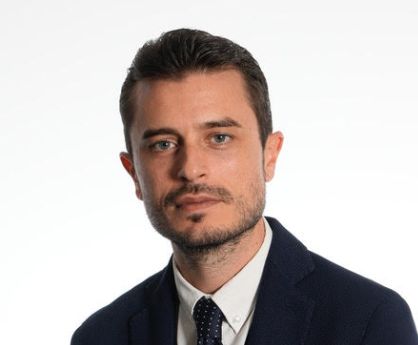
Digital humanities and human digitalities: the role of geodata in the world sensing era.
Despite the rapid advances of large language models and generative AI, which are transforming how humans interact with digital information, complex spatial data still struggle to be effectively interpreted by AI systems. Information-rich datasets such as point clouds, geolocated data, and multi-dimensional spatial representations remain largely opaque, limiting their accessibility beyond domain experts. This gap is particularly relevant for digital humanities, where spatial context plays a fundamental role in knowledge construction, representation and interpretation. In this talk, I discuss how LLMs and generative AI can reshape GeoAI by acting as semantic and cognitive interfaces between humans and complex geospatial data. I show how point clouds, GIS environments, virtual tours, and spatial AI systems can benefit from language-driven interaction and cross-modal interpretation. These approaches enable more intuitive exploration, narration, and understanding of spatial information across disciplines. Through selected applications, I highlight current limitations and outline future directions toward a human-centered world sensing paradigm.
Università Politecnica delle Marche
Roberto Pierdicca is an Associate Professor of Geomatics at Università Politecnica delle Marche, where he leads the GAP – Geomatics Applications and Processing – lab in the Department of Civil, Building Engineering and Architecture. He earned a PhD in Information Engineering (cum laude, 2017) and holds national habilitation as Full Professor in Geomatics and as Associate Professor in Informatics. A member of ELLIS, his interdisciplinary research spans GeoInformation, cultural heritage, forestry and landscape management, human behavior analysis, and eXtended Reality. He received the EGU Outstanding Young Researcher Award (2021) and the Remote Sensing Young Investigator Award (2025), and has been listed among the global top 2% most cited researchers since 2021. He currently coordinates national and international projects and is scientific advisor and co‑founder of Capstudio and the startup DeepReality.
Program
Opening
Institutional greetings from the Rector of the University of Modena and Reggio Emilia
Prof. Rita Cucchiara
Welcome address from the General Chairs
Prof. Lorenzo Baraldi, Prof. Marcella Cornia
Track 1: Computer Science
Semantic Digital Libraries in Public Administration: Optimizing Certificate Request Management
Carau, Giovanni; D'Avino, Pasquale; Firmani, Donatella; Gullo, Elio; Laura, Luigi
CHAD ASK: Experimenting with a semi-automatic approach based on online surveys to formalise unstructured knowledge in Linked Data
Barzaghi, Sebastian; Moretti, Arianna; Heibi, Ivan; Peroni, Silvio
Defining A Workflow For Semantic Enhancement Of Cultural Heritage Metadata
Moretti, Arianna
Enhancing interoperability of SPARQL endpoints: RESTful and OAI-PMH API for the DH-ATLAS project
Bardi, Alessia; Rubin, Giorgia; Del Gratta, Riccardo; Del Grosso, Angelo
MetaFAIR Ecosystem for SSH Digital Libraries: Dataset Packaging, Validation, and SPARQL Publication
Spadi, Alessia; Degl'Innocenti, Emiliano; Pinna, Francesco; Spinelli, Federica
Coffee Break
Track 2: Digital Humanities
The Joys and Sorrows of Data Normalization: Working with Sources from the Franciscan Custody of the Holy Land, XVII-XVIII Centuries
Iodice, Antonio; De Benedictis, Alessia
Introducing a data harmonisation workflow exploiting the BNF SPARQL service to produce and disseminate a research-oriented bibliographic dataset concerning the Early Modern period
Moretti, Arianna; Tiihonen, Iiro; Fischer, Jonas
FAIR Training Materials for Disciplinary Research Infrastructures: Metadata, Vocabularies, and Selective Harvesting in the H2IOSC Ecosystem
Melaccio, Daniele; Pedonese, Giulia; Van der Lek, Iulianna; Kontino, Thalassia; Frontini, Francesca
Archival Knowledge Graphs: Balancing Semantic Richness and Accessibility of Hierarchical Structures
Grillo, Remo; Giagnolini, Lucia; Bonora, Paolo
Track 1: Computer Science
LLM-driven Open Information Extraction of Business Data from Documents on Climate Change
Baroni, Samuele; Ferri, Chiara; Celli, Fabio
CroQS: Cross-modal Query Suggestion for Text-to-Image Retrieval in Image Archives
Pacini, Giacomo; Messina, Nicola; Tonellotto, Nicola; Amato, Giuseppe; Falchi, Fabrizio
Querying LLMs as if they were Digital Libraries
Cazzaro, Mirco; Silvello, Gianmaria
A Quantitative Analysis of Diamond Open Access Publishing in Italy
Angioni, Simone; Baglioni, Miriam; Bardi, Alessia; Manghi, Paolo; Mannocci, Andrea; Pavone, Gina
Lunch Break
Invited Talk
A Roadmap for the Everyday Use of LLMs: Emerging Risks and Research Directions
Debora Nozza
Track 2: Digital Humanities
The Codes Talk: Automated Extraction and Normalization of ISBNs for Metadata Integration
Aftar, Sania; Vigliermo, Riccardo; Bergamaschi, Sonia
Beyond Archives: Designing a Segmentation and ATR Workflow for Mid-Twentieth-Century Italian Typescripts in a Relational Digital Library
Lembo, Giulia
Data affordances in Digital Humanities information visualisation practices
Renda, Giulia; Daquino, Marilena
Addressing the problem of file formats obsolescence using AI: the methodology proposed by Emilia-Romagna Digital Archival Centre
Allegrezza, Stefano; Casagni, Cristiano; Tascone, Marianna
Coffee Break
Track 1: Computer Science
Document Processing and Knowledge Management for Digital Libraries
Ferilli, Stefano; Bernasconi, Eleonora; Redavid, Domenico
An Open-Source solution for layout parsing of historical Italian newspapers
Imboden, Silvano; Guidazzoli, Antonella; Andrucci, Federico; Marconi, Gabriele; Fatigati, Gabriele; Mattei, Luca; Pansini, Rossella; Albertin, Fauzia; Gianelli, Alex; Caraceni, Simona; Sforzini, Donatella; Liguori, Maria Chiara; Baisi, Giovanni; Cardano, Giorgia; Lanzarini, Angela
Piscis in tabula: Turning Environmental Data into Actionable Reports
Portelli, Beatrice; Falcon, Alex; Lizzio Bosco, Daniele; Tomè, Paolo; Galeotti, Marco; Zrnčić, Snježana; Serra, Giuseppe
MAGDA: A Clustering-Based Retrieval-Augmented Generation System for Gender Gap Analysis in Digital Libraries
Santacroce, Marta; Benassi, Riccardo; Contalbo, Michele Luca; Paganelli, Matteo; Pederzoli, Sara; Vincini, Maurizio; Guerra, Francesco
Evaluating RAG approaches for Question Answering
Agosti, Maristella; D'Errico, Nicola; Firmani, Donatella; Fantozzi, Paolo; Laura, Luigi
Annotaterm: A Fragment-Based Approach for Annotating Discontinuous Named Entities and Terms
Di Nunzio, Giorgio Maria; Vezzani, Federica
Track 1: Computer Science
Diagnosing the Limits of Large Language Models for Meta-Analytic Evidence Extraction
Tan, Zhiyin; D’Souza, Jennifer
Automatic Domain Classification of Tabular Datasets Using Large Language Models
Deeva, Irina; Gamper, Elizaveta
How Surprising Is Historical Italian to Language Models? Tokenization Tax, Comprehension Tax, and a Simple Mitigation
Levchenko, Mariia
Towards Real-world Application of Timeline Summarization in a Local Media
Shinjo, Hayata; Mendonça, Israel; Aritsugi, Masayoshi
Efficient and Reliable Estimation of Named Entity Linking Quality: A Case Study on GutBrainIE
Martinelli, Marco; Marchesin, Stefano; Silvello, Gianmaria
Coffee Break
Invited Talk
Digital humanities and human digitalities: the role of geodata in the world sensing era.
Roberto Pierdicca
Track 2: Digital Humanities
Sakha artefacts in the collection of Europeana
Vasileva, Saiyyna; Zilio, Daniel
SICHELIA: Sicilian Intangible Cultural Heritage Exploration Leveraging Open Data
Speranza, Giulia; Manna, Raffaele; Di Buono, Maria Pia
Tracing the art market: a hybrid approach to digitise historical auction catalogues
Daquino, Marilena ; Mambelli, Francesca; Pasqual, Valentina; Rossetti, Valentina; Tomasi, Francesca
Lunch Break
Track 1: Computer Science
AI in-the-loop: the AI-assisted digitisation workflow of the Fondazione Zeri’s auction catalogues collection
Bonora, Paolo; Vitale, Tommaso
An AI-based system for medico-legal document analysis
Marulli, Matteo; Bertini, Marco
Improving DLA datasets through semantic checking and relation-aware multimodal LLMs
Massai, Lorenzo; Marinai, Simone
Harnessing Self-Supervised Features for Art Classification
Prato, Emanuele; Bilardello, Davide; Melis, Federico; Turri, Evelyn; Baraldi, Lorenzo
Track 2: Digital Humanities
Lamba: Mamba State Space Model Adapted to Latin Semantic Retrieval
Scapini, Elia; Iezzi, Federico
Digital Approaches to Handwritten Text Recognition in Complex Art-Historical Archives: Towards an Organic Text Model for the Giovanni Battista Cavalcaselle Manuscripts
Palermo, Jenny
The Cartoonists Meta-description Framework
De Luce, Valerio; Uricchio, Tiberio
Research papers: 15 minutes (12' presentation + 3' Q&A)
Short papers: 10 minutes (8' presentation + 2' Q&A)
Extended abstracts: 10 minutes (8' presentation + 2' Q&A)
Venue
Modena, Italy
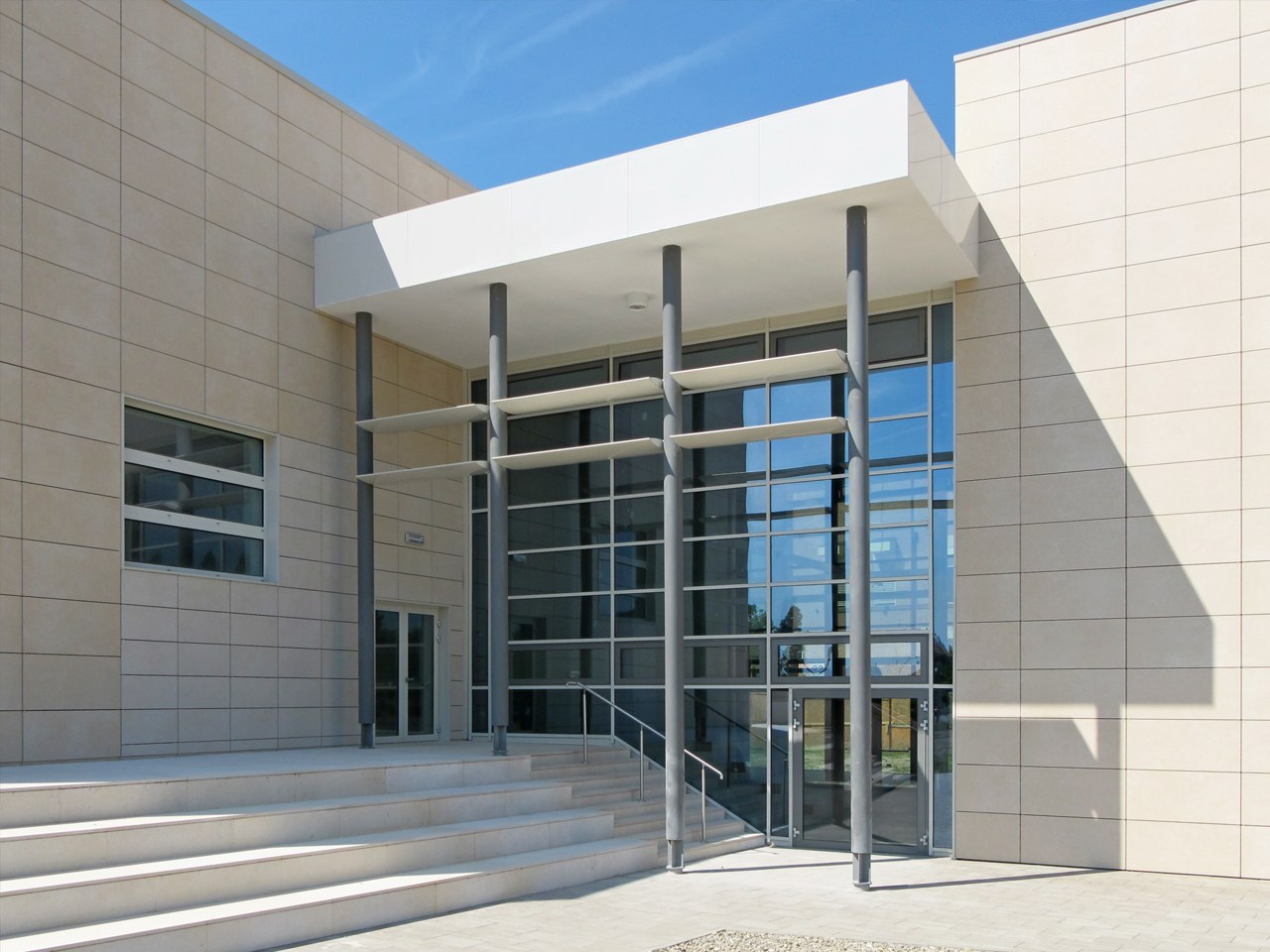
The Conference will take place at the Campus of the “Enzo Ferrari” Department of Engineering (DIEF) of the University of Modena and Reggio Emilia (UNIMORE) in Modena, Italy. The campus is about 3 km from the centre of Modena and about 40 km from Bologna International Airport (BLQ). You can reach the campus by bus, car or taxi. Public bikes and scooters are available around Modena.
Address: Via P. Vivarelli, 10 - 41125 Modena (MO), Italy
Google Maps: View location
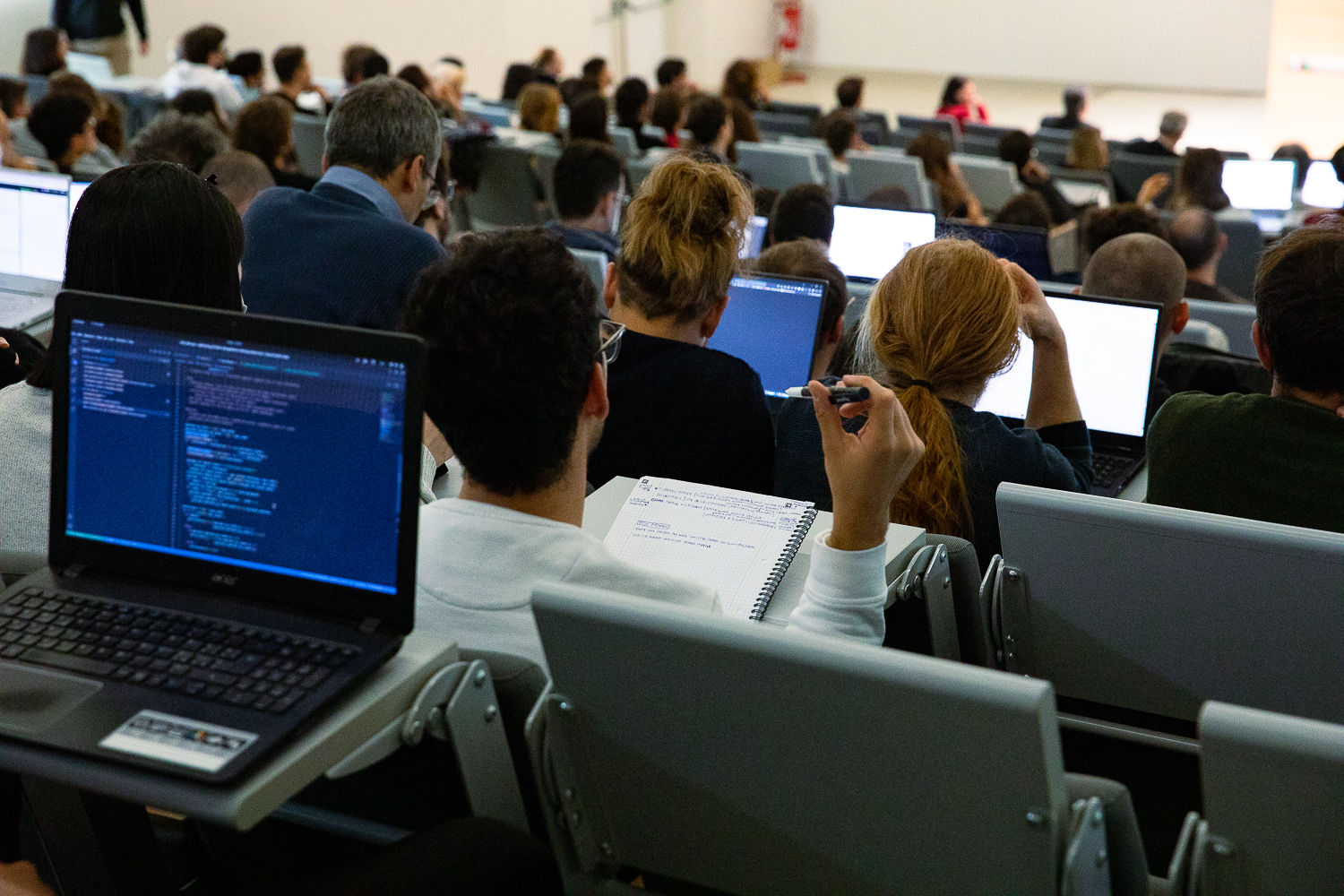
Invited talks and paper presentations will take place at the Auditorium of the Technopole, located in the same campus. Coffee and lunch breaks will take place in the entrance halls (foyers) outside the Technopole.
Transportation
By plane
The closest airport is Bologna “Guglielmo Marconi” (BLQ), about 40 km from the venue. From BLQ, reach Bologna train station by taxi or bus, then follow the “By train” step. Alternatively, use the shuttle service connecting the airport to Modena and get off at the Modena - Vignolese Università stop.
By train
See the Trenitalia website for trains to Modena station. From the station, two lines connect to the University area:
- Line 7/A (destination “Gottardi”) - Departure: “Stazione FS” - Arrival: “Gottardi”.
- Line 9/9A (destination “Gottardi”) - Departure: “Stazione FS” - Arrival: “Gottardi”.
For timetables and updates, check SETA, the local transport operator.
By car
Exit: Modena sud. After the toll, turn right on Via Vignolese and continue straight for ~10 km. After the first roundabout (ring road intersection), turn right at the first street (Via Gelmini); the University buildings are a few meters ahead on the left.
Getting around
The venue is a short distance from the city centre and the railway station. Taxis are recommended between hotels, station, airports and the campus; local buses are also a good option within the city.
Taxi info
- City centre → DIEF (~3 km): 5-10 mins, €8-12
- Modena Station → DIEF (~6 km): 10-15 mins, €10-15
- BLQ Airport → DIEF (~40 km): 40-60 mins - Taxi: €70-120; Train: BLQ → Modena (~30-40 mins) + taxi/bus
Radio Taxi Modena (COTAMO): +39 059 374242. Apps: Free Now, ItTaxi.
Indicative fares (2025): initial (day) €3.5-4.0; night/holidays €5.0-6.0; €1.0-1.5 per km; minimum urban €6.0-7.0; waiting €30-35 per half hour. Night tariff applies ~21:30-06:00; extras may apply from airports or for advance bookings.
By bus
SETA operates frequent urban buses between the city centre, Modena station, and the UNIMORE engineering campus. Plan your journey and check real-time updates at setaweb.it.
Hotels
We recommend staying in the historic city centre or within walking distance of the Department of Engineering for easy access and a great city experience.
- Phi Hotel Canalgrande - Website - 4★, historic, prime centre
- Hotel Cervetta 5 - Website - 3★ boutique, central
- Milano Palace Hotel - Website - 4★ superior, elegant
- Hotel Libertà - Website - 3★, historic centre
- Hotel Estense - Website - 3★, near Duomo
- Hotel Principe - Website - 4★, central
- Central Park Modena - Website - 4★, near centre
- Hotel Daunia - Website - 3★, quiet, close to Department
- B&B Hotel Modena - Website - 3★, close to Department
City Guide
Modena is a UNESCO World Heritage site (Ghirlandina Tower, Piazza Grande, and the Cathedral), home to the Gallerie Estensi and birthplace of Enzo Ferrari in the heart of the Motor Valley. Two Ferrari Museums are nearby (Modena and Maranello). Modena is also a paradise for food lovers and hosts Osteria Francescana by Massimo Bottura.
For a complete guide, visit VisitModena.
Restaurants
- Osteria Francescana - Website - Three-Michelin-star fine dining (book well in advance).
- Franceschetta58 - Website - Casual-fine dining by Bottura.
- Antica Moka - Website - Refined local tradition.
- Locanda In San Francesco - Website - Elegant Italian dining.
- Ad Maiora - Website - Modern Italian, formal setting.
- Ristorante Da Danilo - Website - Classic Modenese.
- Trattoria Aldina - Website - Handmade pasta, gnocco fritto.
- Trattoria Ermes - Rustic, very traditional Modenese cooking.
- Trattoria Il Fantino - Website - Classic Emilian dishes.
- Trattoria San Pietro - Website - Traditional Modenese cuisine.
- Ristorante Damedeo - Website - Italian and Modenese cuisine.
- Strada Facendo - Website - Regional Italian cuisine.
- Zelmira - Website - Northern Italian, Modenese focus.
- Piccola Osteria Zemian - Intimate Emilian cuisine.
Organizers
The team behind IRCDL 2026
General Chairs
Lorenzo Baraldi
University of Modena and Reggio Emilia
Marcella Cornia
University of Modena and Reggio Emilia
Program Chairs
Track 1
Computer Science Foundations for Digital Libraries: Algorithms, Systems, and Applications
Fabio Carrara
ISTI-CNR
Stefano Marchesin
University of Padua
Vittorio Cuculo
University of Modena and Reggio Emilia
Track 2
Digital Humanities: The Science and Foundation of Modern Humanities Libraries
Marilena Daquino
University of Bologna
Marina Paolanti
University of Macerata
Publication Chair
Sara Sarto
University of Modena and Reggio Emilia
Publicity Chairs
Emanuele Balloni
Università Politecnica delle Marche
Davide Caffagni
University of Modena and Reggio Emilia
Beatrice Portelli
University of Udine
Local Organization Chairs
Davide Bucciarelli
University of Modena and Reggio Emilia
Evelyn Turri
University of Modena and Reggio Emilia
Leonardo Zini
University of Modena and Reggio Emilia
Special Issue Chairs
Gianmaria Silvello
University of Padua
Social Dinner
In Modena
Join us for an unforgettable evening at our social dinner, at Uva d'Oro, located in the very heart of the historic city center. Just steps away from the city’s iconic landmarks, this elegant venue offers a warm and refined atmosphere, perfect for a memorable night together.
During the dinner, you’ll savor local specialties from Modenese tradition, thoughtfully prepared. It’s the ideal occasion to unwind, connect, and indulge in the authentic flavors of Modena - don’t miss it!